



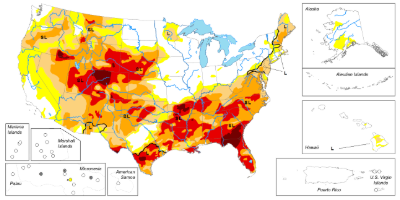
Drought conditions are tightening their grip across large portions of the United States as the growing season gets underway, according to the latest U.S. Drought Monitor report map released on April 23, 2026.
With dryness expanding in several key agricultural regions, farmers are facing early-season challenges that could impact planting decisions, crop development, and overall yield potential.
Where Drought Is Worsening
The latest map shows drought conditions intensifying across parts of the Midwest, Plains, and West, with some areas experiencing moderate to severe drought levels.
Key highlights:
- Drought coverage has expanded in portions of the central and northern Plains, including Kansas, Nebraska, and South Dakota
- Dry conditions persist across parts of the Midwest, including areas of Iowa and Missouri
- California and the Southwest regions continue to face long-term drought pressure
These patterns are especially concerning as soil moisture levels play a critical role during early planting and crop emergence.
How Current Drought Levels Are Impacting Fields
Drought conditions are already affecting field conditions across key growing regions:
- Abnormally dry areas are seeing slower soil moisture recovery, making early planting more dependent on timely rainfall.
- Moderate drought zones are beginning to experience crop stress and declining pasture conditions.
- Severe drought regions face increasing risk of yield impact and limited water availability.
Even less severe drought conditions can affect emergence and early crop development, especially without timely precipitation.
What This Means For Farmers Right Now
As planting ramps up, moisture availability is one of the most important factors shaping field conditions.
Dry soils can:
- Delay germination and uneven crop emergence
- Increase reliance on timely rainfall
- Add pressure on irrigation systems where available
In some regions, farmers may need to adjust planting timing or monitor conditions more closely as weather patterns develop.
Stay Prepared This Season
Weather conditions in the coming weeks will be critical in determining how drought trends evolve. Consistent rainfall could stabilize conditions, while continued dryness may intensify stress on crops and pastures as the season progresses.
For now, staying informed and adapting to changing field conditions will be key as drought remains a factor across much of the country. From planting to field maintenance, having the right equipment can help you respond to changing conditions in real time.
Explore available equipment or connect with your local John Deere dealer to find solutions that support your operation this season.